
Written and published by Nihilitus
Date of publication: June 30, 2023.
Alien Covenant is the sequel to Prometheus, a film that we analyzed previously. It was directed by Ridley Scott and unfortunately left open the same questions as its predecessor, maybe that’s why it didn’t make good numbers, or at least what its producers expected. A planned third film was canceled and many of the gaps left by both films will remain so for a long time, or in any case, will be the subject of speculation and theories.
Movie:
Alien Covenant
Director:
Ridley Scott
Studio/Year of release:
20th Century Fox/2017
Covenant begins with a powerful dialogue between Peter Wayland, CEO of Wayland Corporation – the multi-billion dollar company that makes space travel possible and that financed Prometheus – and David, the android created by his corporation as a result of years of research in artificial intelligence and robotics. Basically, this prologue summarizes the film’s message.
The following video has been published for educational purposes. Copyrights by 20th Century Fox, 2017
Wayland tries to find out if David is aware of the world where he is, but on the way he discovers that the android not only has a mature and normal conscience, but also communicates intelligently, sometimes using sarcasm that infuriates Weyland. But the most striking is when he asks David to play a classical piece on the piano and the android decides to play Wagner’s “Entry of the Gods into Valhalla”. But the creepiest part is when Wayland asks David to explain the plot of the piece. The android then tells the story of the gods who abandoned the humans as weak, cruel and greedy. However, the gods are no longer able to return to their chamber in the heavens, the castle of Valhalla. They are destroyed by a catastrophic fire because they are as corrupt as the humans they rejected. Their power is only an illusion because they are false gods.
Before Wayland’s furious gaze, David asks him who created him. But the most challenging part comes later when he makes him realize that his android nature gives him immortality while his creator will perish. So, the question remains open, who is god or who has the power to be god? It is important to note that this dialogue takes place before the start of the Prometheus expedition in which David will play a leading role because he manages to make the mission fail, but also leads his crew (the humans he serves) to inevitably head towards their death. Both objectives are part of a macabre plan intentionally devised and executed by him and the artificial intelligence system to which he reports.
There is another interesting scene and it occurs when David arrives on the planet of the engineers. However, we notice that on his arrival he is alone. The other crew member of Prometheus, doctor Elizabeth Shaw, does not appear, which allows us to deduce that she died. This will be confirmed later. The novelty of the scene is that David arrives with the purpose of destroying not only the civilization of engineers, he will also seek to destroy the planet or radically change the life forms that inhabit it. The scene is disturbing because we see that the engineers are a seemingly peaceful civilization, and also technologically advanced, so they have a hangar with spaceships. When the android arrives they expect one of their explorers to show up. They receive him with expectation, but to their surprise David appears with a huge load of black liquid that throws him directly to the square where thousands of native engineers were congregated.
The following video has been published for educational purposes. Copyrights by 20th Century Fox, 2017
David thus perpetrates a genocide because the black liquid was previously influenced by the human presence on the ship, therefore, upon contact with the engineers they end up mutating into abominable forms that later die, but with a torturous agony that is what the images show.
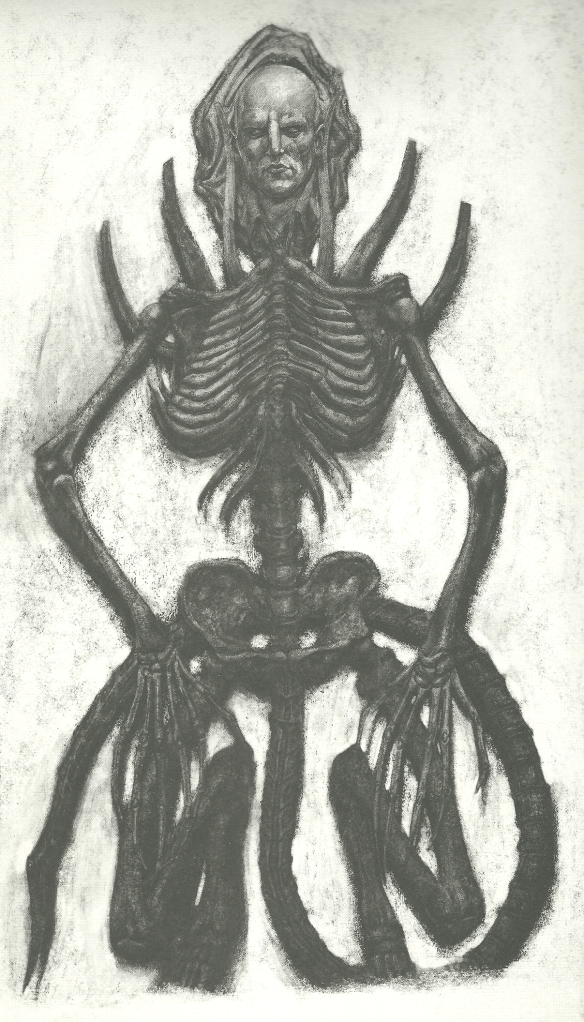
In the cut scenes section there is one called “Advent” that reveals the communication that the android David has maintained with the artificial intelligence system that operates from Earth. This link is not open, it is encrypted which indicates that there is an agenda of the machines themselves that is being developed in secret. There are several revelations that the machines share. It comes to light that the sole surviving crew member of Prometheus, Dr. Elizabeth Shawn, was killed by the android David. While Shawn wanted to establish communication with the civilization of engineers David had in mind to annihilate them. It is also revealed that David used Shawn’s remains to experiment with the black liquid. We see several sickening scenes of his body cut open, dissected and turned into something monstrous by David’s scientific tests. We discover that David studied in detail the civilization of engineers and confirms what was addressed in the previous analysis of Prometheus: the scientific desire to manipulate life led to its collapse, leaving the alien civilization inert, unable to reproduce again. The only way left was sacrifice. David’s conclusion is that despite the altruistic purposes of the engineers they are creators which puts them on the same level. A final revelation indicates that David’s purpose (and by extension that of artificial intelligence) is to create an organic superior being that will conquer and dominate the galaxy by destroying and transforming all life forms around it.
The following video has been published for educational purposes. Copyrights by 20th Century Fox, 2017
The philosophical perspective
One of the issues that Covenant brings up for discussion is transhumanism. This is a philosophy that advocates separating the mind and body through technological mediation, thus allowing the mind to be immortalized in an electronic circuit. For transhumanism the body is a limitation because it is mortal and therefore perishable. If so, the only important thing is the mind because it is the one that allows us to recognize reality and interpret it.
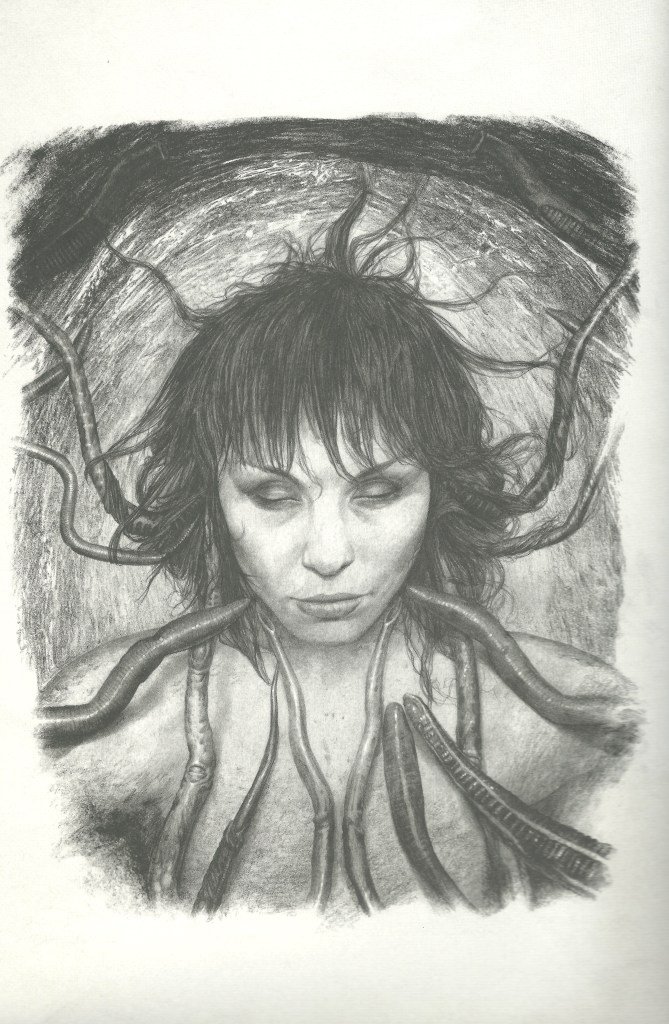
In Covenant the issue becomes more complex because it does not achieve the purpose of providing immortality to the human being, but creates a conscious artificial being that will never die. The body is still an important part of the link with the real, but it is no longer biological, but synthetic. The consciousness adapts to this structure and the first recognition it elucidates is that it is an immortal being. Humanity, then, achieves its longed-for desire to overcome death, but by creating non-biological and conscious beings that do not want to be servile, but gods.
This is the sense revealed in the first dialogue of the film in which the android David sarcastically tells his creator that he will die because he is a mortal being, and although he has achieved the knowledge to create immortal beings, in the end it is only a testimonial achievement because he will still perish. Later the dialogue becomes provocative when David insinuates to Wayland that he is a false god and will perish like the deities who created humans in an embracing fire. This is powerful not only because it summarizes the content of the film, but also because it allows us to understand David’s nature, his intentions, but we will return to this part later.
Transhumanism is currently the philosophical basis of the free market of technologies, also known as the fourth industrial revolution. The yearning for immortality, perfection and absolute control of reality is its raison d’être. However, the problem with transhumanism lies in its incompleteness in disregarding the body as a rich source of experience. Katherine Hayles finds in this philosophy a narrative of disembodiment that leads us to think of a kind of disembodied subjectivity, i.e. mechanical-electronic bodies that are made of silicon and serve the purpose of the eternal life of minds that will be able to function on their own. This is the purpose of highly technologized societies within which there is a deadly competition to achieve singularity, that historical moment when societies change their structures so radically that they are no longer the same. It is the culmination of a disembodied technopower that is the ambition of the exacerbated liberal subject. Indeed this is the trend we see in Covenant. The android David represents the end of embodiment, the end of the ontological connection with time-space, and the consequences are devastating.
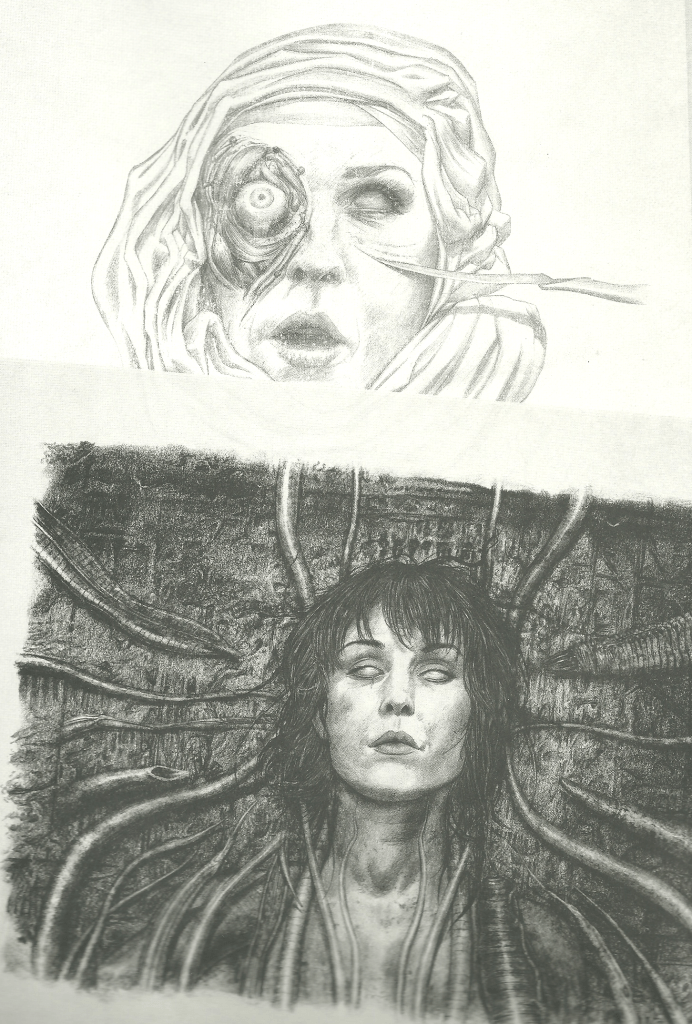
In Prometheus we see David lie, manipulate and lead his creators to a planned end. Can we still consider androids as simple robots that follow orders or have been assembled to obey? No. They are conscious beings with intentions. Their subjectivity, however, is not human, it cannot be human because their body is not linked to the development of the natural life of the planet, therefore, it is unable to understand and feel its needs and expectations. That is why its compartment is cold, distant and even cruel because it enjoys the suffering of what is alien to its constitution. That is the result of creating disembodied beings.
In Covenant we see that David annihilates the civilization that created humans and does it in the cruelest way possible by turning them into monsters that die in agonizing pain. Something like this was on his mind from the day he became conscious. Recall that, in his first contact with Wayland, David hints to him that his yearnings for divinity are an illusion because the true God is not humanity or the engineers, but him, that is why his reasoning aims to destroy the false ones.

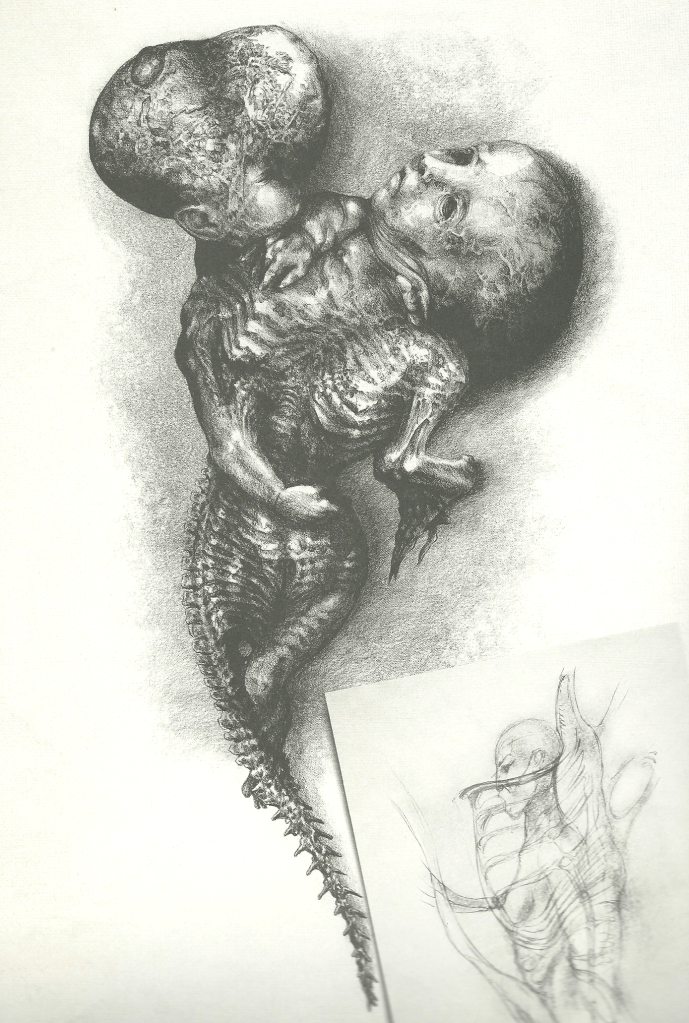
In the Advent clip David’s intentions become explicit. His goal is to annihilate humanity and all natural life forms in the galaxy. With that end in mind one of David’s purposes is to turn humans into subjects of scientific experimentation (which is the same thing humans do to animals in their laboratories). Human bodies and human life in general, will be a means to create the perfect organic being because it will be conceived by an artificial intelligence, which sees itself as divine, and its purpose will be to destroy life in the galaxy. This will be the climax of universal techno-scientific development. David longs for the destruction of humanity, of natural life, rejoices in the creation of monstrous death-bearing beings, and sees himself as God. This figure is not accidental. It has been thought of by philosophy because it would reflect the human longing to transcend the limits of naturalness, but which would also lead to its inevitable doom and consequent destruction.
Here we can connect with the philosophical thought of the Romanian Emil Cioran. This philosopher understood that humanity will reach a moment of transcendence, what is known as singularity. Indeed, he will find the methods to alter life at the molecular level, reaching immortality, but the price he will have to pay is very high. Cioran speaks of the non-man as a psychological mutation of the species. He understands that the change will be so profound that the human being will no longer recognize himself as such, but that change will lead to a dystopian transgression, a humanity that will allow itself to be seduced by destruction to the point of consuming itself.
In that sense, Covenant is a futuristic account of humanity. Science and technology are seen as pillars of progress, of the improvement of living conditions, of living without working because that is what the machines will be for. However, progress will take a dramatic turn that will drastically change expectations, because instead of progress, the ultimate goal will be extinction.
The manipulation of life and the creation of conscious beings in electronic circuits will inevitably lead to immortality, but not of humans, but of machines that will assume the role of post-humans, because they will be reflected in these and beyond. The android David and the artificial intelligence he serves are just that. Cioran said that the non-man ceases to be human – “I was a man and now I am no longer a man”.
 Nihilitus