
Written and published by Nihilitus
Date of publication: October 30, 2022.
The Addiction (1995) is a film directed by Abel Ferrara that basically addresses the problem of evil, its origin and redemption. To that effect, it tells us a story filmed in black and white, in which its protagonist Kathleen Conklin (Lili Taylor), a doctoral student of philosophy at New York University, will face a supernatural alteration of her body. On the one hand, in her role as a student, she questions the double standards by which modern society functions, applying, for example, genocidal solutions for world peace. The questioning of Western values of modern society is one of his objects of study, but everything will change dramatically the night he meets Casanova (Annabella Sciorra).
Movie:
The Addiction
Director:
Abel Ferrara
Studio/Year of release:
October Films/1995
This woman appears unexpectedly on the street as a stranger who will kidnap Kathleen to take her to an alley and intimidate her. Ketheleen pleads for her life expecting a deadly attack from her kidnapper, but she unexpectedly launches herself against her neck to suck her blood. Staring at her, the mysterious woman in black warns Kathleen that this was only the beginning of a series of radical changes she was about to experience.
The following video has been published for educational purposes. Copyrights by October Films, 1995
The horrified victim, her neck bleeding, goes to the first hospital she can find. Her injury appears to be free of infection and she is advised to rest and carefully treat the wound. However, Kathleen does not feel well. As the hours pass, she begins to feel the side effects of the bite. Disturbing dreams, intense pain, loss of appetite, among others, will be the signs of the dramatic somatic change she will experience.
Kathleen will not only have to deal with the effects of the bite, but as they become more intense, a deep instinct, unknown to her, begins to emerge: the appetite to drink and feed on human blood. Not understanding the origin of this drive, Kathleen resists and refuses to give in to the impulse. However, it will only be a matter of time before she ends up repeating what her attacker did to her.
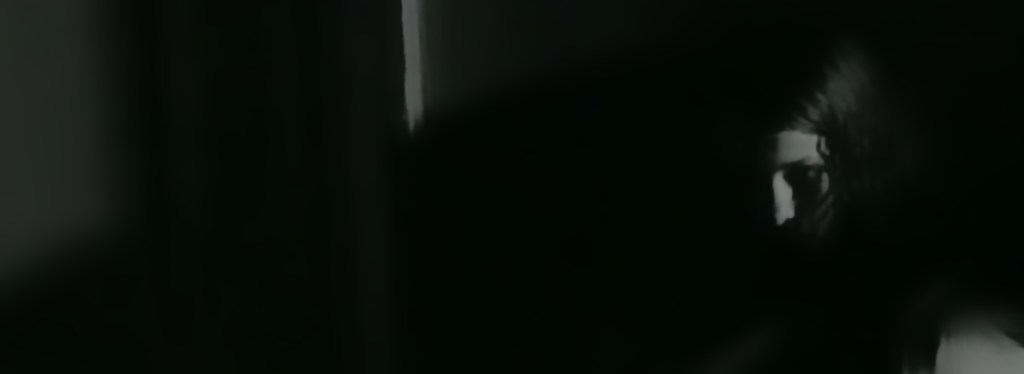
Indeed, Ketheleen ends up becoming a vampire who will first look for easy victims. But it is not only a biological necessity. Her personality also begins to change. She is no longer herself. She now sees herself as a predatory animal who goes out at night to seek human blood from the most docile victim she can find.
The conclusion of the story is quite novel, with an army of vampires turned by Kathleen chaotizing New York University. But beyond questioning the internal structure of the film what interests us is to highlight what the character discovers about herself before and after becoming a vampire.
The following video has been published for educational purposes. Copyrights by October Films, 1995
As a student, her questioning of the double standards of a capitalist society are extensive, and her arguments basically point to the recognition that we live in a deep state of guilt because we fail to see what we really are: animals that live by their instincts; these control all aspects of their lives and for which there is no redemption because that is our natural condition. One of the most interesting passages read in the film is the reflection that Kathleen’s teacher (Paul Calderon) explains aloud to his students.
“One aspect of determinism manifests itself in the fact that the unredeemed do not recognize the sin in their lives. They have no remorse because they don’t want to acknowledge that evil exists. All are predestined to hell, and therefore never discovered metanoia or conversion…… redemption only exists in the life of a believer and considering that guilt can be redemptive, suffering is a positive thing. We should feel guilt and pain, in order to achieve forgiveness and freedom. Guilt indicates that God works out your destiny, and whoever refuses to accept it is a fool”.
Even in these arguments appears the notion of well-being that only comes from divine enlightenment, which in philosophical terms translates into the positive construction of life as the essence of progress. However, our society has only carried these intentions in its rhetoric because it has wanted to reflect itself as an example of progress and welfare that together lead to the construction of a stable and model civilization. However, the reality is far from being so because today we know that progress is only possible at the cost of much pain, suffering and even death and annihilation of the other.
Kathleen probably had to live this reality in her own flesh because she could only have a limited knowledge of the essence of human nature in the academy. When she was infected and became a vampire, all the critical discourse she had of her society collapsed. Why? She was now as abominable as the power monsters running her society. By living the experience from another perspective, naturally her idea of thinking about the world changed. One of the character’s last reflections makes clear to us the radical nature of this change.
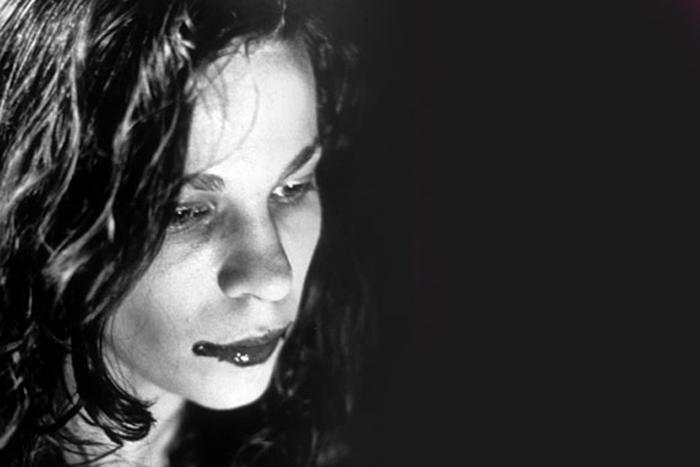
“Santillana’s phrase: Those who do not learn history are condemned to repeat it, is a lie. History does not exist. What we are is always with us. The question is: what can save us from our insane insistence on expanding misfortune to larger circles? Now, my God, I know how you must see us from there. Our addiction is evil. The propensity to this evil lies in our inner weakness…… Kierkegaard was right: there is a terrible precipice before us, But he was wrong about the jump. There is a difference between jumping and being pushed. There comes a point where you have to satisfy your needs. And you are trapped by the fact that you can’t end that situation. It’s not: “cogito ergo sum’ (I think, therefore I am), but ‘pecco ergo sum.” (I sin, therefore I am.)”.
Seeing herself as a monster responding only to her instincts definitely changed Kathleen’s existential perspective. The last thing she would have wanted was for the evil that she herself criticized in her environment to acquire an objective manifestation in her body. What to do when the body is hungry? Eating. And is feeding a condemnation? It is now if we have to kill someone in between. The concluding part of the character’s story teaches us that behind our instinctive acts there is more than just bad intentions. It is our naturalness and essence that manifests itself in the middle. We are not bad because we want to be, but because we come from nature, and redemption only exists for those who recognize this condition and renounce it. However, by renouncing life, it loses meaning. Self-revelation redeems us, but at the same time it destroys us.
“Addiction has a dual nature: it satisfies the appetite that breeds evil, but it also clouds our perception so that we forget how sick we are. We drink to run away from the fact that we are alcoholics…. Existence is the search for relief from our addiction. And our addiction is the only relief we find.”
R. C. Sproul: “We are not sinners because we sin, but we sin because we are sinners.” “We are not evil because of the evil we do. We do evil because we are evil. What options do people have left? There seem to be no options at all. To face what we are in the end, we stand before the light, and our true nature is revealed. Self-revelation is the annihilation of the self.”
 Nihilitus