
Part One: The end of liberal democracy and the emergence of world government in Jason Reza Jorjani’s “World State of Emergency”
Written and published by Nihilitus
Date of publication: June 19, 2022
The American philosopher Jason Reza questions the survival of liberal democracies, their universalization and the inevitable change of political order around the world. He warns about technological apocalypse or singularity that will come from four directions: biotechnology, robotics, virtual reality and the end of the oil era that will force world potencies to look for a new source of energy beyond the limits of the planet (either in asteroids or the moon).
These events, taken together, will create a global state of emergency, annihilate liberal democracies and create the conditions for the (necessary) establishment of a world government. One of the aspects that Reza constantly questions is the universalization of human rights, which is a fundamental part of modern democracies. This element is incompatible for the establishment of a world government, instead Reza proposes that the new order must have its ethos in the Aryan or Indo-European tradition, but to reach that point humanity will face a war of global extension, the third world war, the longest war that according to Reza began on September 11, 2001.
This conflict will not be based on the dispute of power between states, but between civilizations, and will help to overcome the notion of the nation state as the basic unit of political organization.
In this first part Reza explains the weaknesses and contradictions of liberal democracy, which allows him to argue that since its inception this model of political organization was doomed to its dissolution or overcoming. Instead of exalting the equality of rights, their universalization, freedom of expression and respect for individuality, Reza suggests that the opposite values are the ones that must be established because the new reality derived from the technological apocalypse demands it. Throughout this first analysis, these ideas, some of them controversial, will be explained. The purpose is to expose and discuss them.
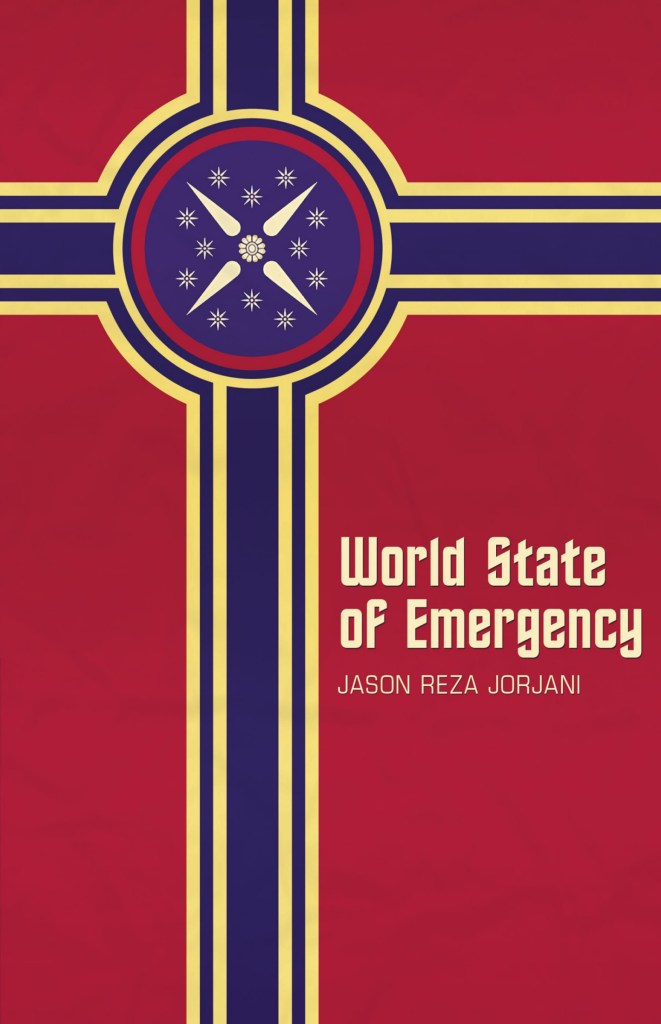
Jason Reza questions the survival of liberal democracies in this book. Arktos media, 2017
The universalization of liberal democracy
One of the first issue that Reza analyzes in liberal democracies is their universalization. He takes up Emanuel Huntington’s contribution when he criticizes the misleading aspirations to universalize this productive political model in the context of the communist failure and the end of the Soviet Union. After the Cold War there were so many forms of political and economic models around the globe that it was foolish to think that liberal democracy had spread worldwide. While there were some countries that incorporated more liberal and democratic elements into their political and economic systems, this did not necessarily lead to their westernization. The Arab Spring is an example of this phenomenon. The Chinese case is another example, even though this country chose Marxism over liberal democracy, but it did so in order to avoid the Westernization of its people, to strengthen nationalism and to expand the belief in Chinese ethnic superiority over the West.
Citing Huntington Reza points out that modern democracies carry a paradox in their constitution that is the reason for their decline. Having extended to non-Western countries, the living standards of the population declined because their societies never modernized and never followed a logical process of structural transformation from the elites to the people. As a result, the democratic processes of power transition created new elite groups (some coming from the subordinate classes) that overthrew the mediocre and corrupt Western ruling elites. The problem is not just the change of power, but the semantics that brought about the change. With new local leaders in power, the sense of politics changed to nationalism, religion once again took center stage in socio-political life and the state assumed an invasive role in society as a whole. All these phenomena have occurred in non-Western countries where liberal democracy failed, such as Venezuela, Ecuador or Bolivia. In these places the free economy did not improve the living conditions of the population, basic services such as education and health were precarious, high levels of crime made them dangerous places to live and finally corruption was a recurring theme that was directly associated with the political system. In these conditions populism emerged as a real alternative to liberal democracy and in effect the political systems of these countries were radically transformed giving shape to new nationalist, anti-democratic, fascist and corrupt states. Huntington identified this problem in the 1990s and called it a process of indigenization.
For Huntington, the problem is rooted in the ethos of Western liberal democracy, whose foundations are secular, humanist, and rationalist. Historically, this base matured for various reasons: the strengthening of individualism, the questioning of religious power, its institutions and social influence. But this was the reality of Western countries that lived the process for hundreds of years with wars, deaths, and complex political conflicts. The reality of non-Western countries was different. Their history was marked by miscegenation, the survival of traditions and the power of religion, which saw in these spaces the ideal place to transfer its influence and survive.
For Reza, religion is a fundamental component to understand the collapse of the West and liberal democracy as a model of government. Based on Huntington, he recognizes that the religious dimension is much more powerful than ideology and reason in organizing society. Additionally, it is much more efficient as a means of propagation as opposed to the intellectual study of philosophical, political or economic ideologies espoused by Western intellectual authors.
In addition, there are problematic elements that are revealing a structural crisis in Western societies. There is a marked social and political disintegration whereby society has begun to fragment into increasingly irreconcilable divisions. Perhaps the most notorious element of this trend is the resurgence of extreme nationalism that has revived certain elements of the Nazi narrative in countries such as Italy, France, and the United States itself. Intolerance of immigrant cultures has become a highly conflictive element in Western countries. The migration phenomenon has always been one of the most complex to address within Western legislations, but in recent decades it has been exploited by hostile anti-democratic governments in non-Western regions. The case of Syria is the most notorious as its dictatorial government (supported by the non-Western powerful countries like China and Russia) has forced its population to move outside its borders to seek refuge in the countries of the European Union, which has given rise to a response of solidarity, but also hostility in sectors of the population that rejects migration and the invasion of other cultures. As a result, nationalist movements are on the rise in several EU countries and liberal democratic values have been seriously questioned.
The combination of all these factors allows Reza to conjecture that Western civilization has entered an era of decline perceptible not only in the questioning of its foundations, but also in the crisis of its institutions, the complexity of its societies and the advent of semantics of power that contradict the values that gave birth to liberal democracy.
With these contradictions exposed, Reza reinforces his argument that human rights cannot be universally applied because they have profound inconsistencies of origin. The universal declaration of these rights (which unconditionally protect freedom of religion and declare that popular sovereignty is the basis of the legal authority of governments) was formulated in 1948 at the United Nations as an effort to achieve a common agreement among most of the countries of the world to have a universal legal framework on different issues. This was an initiative derived from the humanitarian catastrophe left by the Second World War. As was to be expected, there were very controversial issues that did not reach agreement and human rights was one of these points. This is where a fundamental distinction in the semantics of power begins to emerge between the different civilizations of the world. For the Arab culture and other parts of the world it was inconceivable to admit that human rights should be universalized because of the millenary tradition of their countries in recognizing slavery, for example, as part of daily coexistence. Not to mention the role of women in society. These countries categorically refused to give women an equal role. More abstract issues such as the rights of nature and animals were not even discussed.
Beyond this detail, what Reza notes is that the declaration was incoherent because it inadvertently allowed the “moral majority” of a religious democracy to deny dissenting minorities the same human rights that are protected by the Declaration. Religious tolerance is based on the secular principle that separates politics and religion. Thus, any religion may be tolerated in the state, but its policies and decisions have no legal implications, and its leading members cannot claim sovereign authority or inherently challenge the sovereign authority of the state as the sole arbiter of laws affecting life, liberty, and property. The problem lies in the fact that this principle reflects the historical reality of the West, of the millenary struggles and wars that separated both dimensions, but this was not the reality of other countries that had a power structure where politics and religion coexisted. In this sense, the declaration of human rights becomes universalist according to the nature and reality of the West, but it is not a reflection of the world reality of all peoples. Since it is not universal, the principle becomes false, therefore, Reza’s argument holds that religious tolerance as such does not exist.
The roots of democracy
For Reza, liberal democracy is a contradiction in itself; the two concepts have never been together because their nature places them on opposite sides. There were very specific historical conditions that allowed them to come together and survive to the present day, but a deep tension between the two has always been clear.
In his analysis of the origins of democracy, Reza reveals some contradictions. For example, he notes that Greek democracy was never a model of inclusive power, in its beginnings only men had the right to discuss, dissent and decide based on the democratic founding principles, however, women, slaves, young people did not have access to these spaces of debate, because their rights as subjects of power were nonexistent.
Democracy in its origins was not subject to the needs and expectations of the people as a mass, but was the mechanism of power that a non-elite group used to change the relations of domination and the way in which political decisions were made. And even though this change was radical because it opposed the tyrannical power of a single person, the religious influence was very strong because it was preserved as a traditional element deeply linked to political life. Reza brings to mind the case of Socrates to exemplify the link between religion and politics. Let us remember that this philosopher was assassinated by order of the Greek democratic government on the grounds that he was corrupting the youth (instilling ideas of separating the political dimension from the religious).
If in ancient Greece democracy was a system contradictory to its own principles, in the United States (the most powerful and richest nation on the planet) it was applied with suspicion and even fear. Reza recalls what two illustrious political thinkers of the rising superpower believed. Both John Adams and James Madison had serious questions about this system of government. The former believed that: “Democracy…wears itself out, exhausts and kills itself. There has never been a democracy that has not committed suicide.” Madison on the other hand was more categorical in postulating that: “Democracy is the vilest form of government…democracies have always been spectacles of turbulence and contention…incompatible with personal security or property rights”.
As Reza notes, there has always been resistance to this political model because it is basically based on giving power to the powerless, the underprivileged, the oppressed, and that is the same as giving them a weapon to take revenge for what the ruling classes have done. And if we also add to it the liberal component, the complexity becomes unstoppable. To deepen the analysis Reza returns to the study of Carl Schmitt. For this German thinker, the political philosophy of liberalism is not only separable from democracy but can even conflict with it. Both models came together due to conjunctural circumstances because they needed to ally and defeat the monarchy.
But Schmitt’s greatest contribution comes from his own experience of German politics in the Weimar period. The liberal democratic ideology of the Weimar Republic allowed the most radical and anti-republican parties to enjoy equal rights to participate in parliamentary elections. But the nonsense was consummated when these political groups won a representative majority that allowed them to abolish the constitution, denying all others the same equal rights of representation and participation by which they came to power in the first place. Schmitt saw in this experience the prime example of the internal contradiction of “liberal democracy,” in which democracy, or majority rule, can contradict the principles of liberalism enshrined in a constitution.
The main challenge is freedom
That is the conclusion Reza reaches. A liberal democracy is supposed to protect the individual freedom of citizens, but this entails contradictions that can threaten the model. It has been shown that anti-democratic groups can take advantage of these inconsistencies to govern. But then there is the problem of political decisions. Does a liberal democracy really promote the discussion of problems and decide based on decisional majorities? In states of national emergency freedoms are suppressed, for example, and only then does the true nature of political power emerge, concentrated in a single individual or a group of people. If so, then what is the point of having a political system based on consensus and majority decision if in the end all power is concentrated in a single sovereign.
To deepen the analysis Reza and Carl Schmitt recover Stuart Mill’s ideas because he established some of the basic postulates of modern liberalism: freedom of expression, freedom of association and limited state intervention in matters that allude to the individual dimension. According to Mill, the individual is sovereign over his body and mind; therefore, society (through its institutions) only has the right to intervene in the vital conduct of individuals, either by force or coercion, to prevent him from causing harm to another. The action of coercing or forcing someone to do something because it is believed to be for that person’s “own good,” physically or morally, is not justified.
In this political account the individual is the central core of society. Stuart Mill postulates that on the one hand individuality is a necessary condition for creativity (or genius as he writes) to emerge; on the other hand, individuality is the fuel of the rebelliousness that is necessary to prevent absolutism. Both properties allow society to grow, evolve and transform itself in an endless and unpredictable cycle because it will be subject to permanent revision, as well as to the innovation of cultural identity. In this framework, the State does have obligations. Instead of limiting individual capacities, it must protect them. The right to rebellion, the right to live originally without being persecuted are its inalienable duty.
However, freedom in Mill’s thinking is conceived so the individual has the power to improve himself, but not the opposite. That is, it is not conceivable for the individual to use his freedom to destroy or harm himself as he might sell himself into slavery. If a man gives up his freedom voluntarily, he gives up the meaning of his individual freedom. For Stuart Mill such a thing is not conceivable, hence no such contract can be respected by law. From this follows the reasoning that if a person is not allowed to sell himself as a slave, he is not legally allowed to commit suicide either. Reza makes an interesting argument in this regard.
Freedom conceived in Mill’s terms gives the individual the ability to think of himself as the owner of his life. But if a religious sect suggests that in order to reach paradise, he must end his terrestrial life (which is supposed to be miserable and a punishment to live), suicide is justified. From the religious perspective the individual is doing good for himself. If so, the State cannot intervene in a matter that is not only private but also religious.
For Reza, this issue relates to the fact that Mill postulated and defended political freedom as the best option for human growth; however, this does not deny the existence of an objective or natural freedom, which is the one that the liberal thinker evades. By placing conditions on freedom, Mill converts it into a rational political construction granted by a government. This knowledge is the result of the evolution of society and its semantics more and more distant from the natural determinism that imposes another type of reality. In an ontological sense, not any person is always free anymore. He is free to the extent that he is part of a society that recognizes him as such and under certain circumstances, but that is far from the natural freedom that is beyond the limits of human societies.
Reza invokes Rousseau to explain how political freedom is an alienating condition by which the individual has had to cede his rights to the community. Rousseau, to explain this condition of freedom, developed the concept of rational general will and manifests it in the democratic act of voting. What transcends democratic choice is not only the common good expressed in the vote of the majority on some issue.
The majority vote reflects a true general will that is comparable to the individual will of upright and disinterested citizens. In contrast, the minority vote represents the inability of a few citizens to disinterestedly understand the common good of society with respect to a given issue. This minority can no longer maintain its mistaken opinion but must be enlightened as to the true general will by the outcome of the vote.
The novelty is to unveil the implications of the minority vote because it means not only losing an election but having misunderstood itself. When the opinion contrary to mine prevails, it simply shows that I was in error, and that what I considered to be the general will be not. Here lies the durability of a democracy because it depends on a collective binding recognition. Losing and winning is part of the political dynamic, it is part of the democratic game, the problem is that the system also allows for unfair play, which is why Schmitt was so suspicious of democracies because the human will be incompatible with democratic norms. Political freedom, in this sense, does not allow exclusion, and that leaves the door open for anti-democratic groups to participate in elections, gain power and destroy democracy.
A source is needed that allows the ideological unity necessary to produce the general will in most of the citizenry. Rousseau identifies two. First, the tribe, with its ancestral customs and unique cultural institutions, emerges from the state of nature spontaneously. The second source is a civil religion that sanctifies the edicts of a legislator or the customs of ancestors as divinely inspired or mandated.
Far from assuming a secular direction in his thinking, Rousseau openly acknowledges that democracy is made up of certain religious practices to produce eternally justified and unimpeachable norms that act as the general will guiding the legislative action of citizens.
Pure philosophy and science in Rousseau’s thought are not allies in the construction of social cohesion. Both lead to a path of subversion and elude the understanding of transcendent truths. For Rousseau rational inquiry alone cannot provide any ethical or moral content to man in place of his ancestral customs or religious beliefs but can only foster a perverse and faithless skepticism.
Philosophy is universalistic and thus essentially threatens the patriotism of a democratic society, which is necessarily a unique and closed society on guard against others with which it has irreconcilable differences. Different democracies are inherently culturally relative. Rousseau considers that philosophers or theoretical scientists must outwardly conform to the religion of the state and the customs of the nation, and in no case should they attempt to “enlighten” the public. They must adhere to a “national philosophy” or ethos. If they pose a threat to public faith in the religious foundations of society, they cannot be tolerated.
Democracy only disguises the concentration of power
Carl Schmitt challenges the classical definition of the modern state as “the political status of a people organized in a closed territorial unit”. His argument is based on the recognition that the state only exists to the extent that it permits (or compels) its citizens to use violence against others and to sacrifice themselves in defense of the common character or ideals of their society. The state is defined by holding this monopoly of violence, and it exists only so long as no other social, economic, or religious force requires its citizens to go out and kill or be killed for some other cause.
For Schmitt there is a need for dominance, and this is the foundation of the authoritarian politics that shapes modern states. In this framework the nature of liberalism is negative because liberals promulgate distrust of government and advocate strict limits on its powers. If the only consistently liberal “politics” would be a stateless anarchism, then it is no wonder that in practice we never see fully liberal ideals realized, but only authoritarian regimes moderated by liberal critiques.
Schmitt argues that the laws that serve as the original foundation of a state must emerge from a decisive action demanded by a concrete existential crisis. This “state of exception” or “state of emergency” is a mirror in which one sees for the first time who really rules and what is the fundamental character that governs a given society.
Schmitt sees this “miraculous” quality of the authentic and effective exercise of sovereignty as revealing the fact that the concept of state sovereignty is a substitution for the theological conception of God’s sovereignty. This seems to suggest that the actions of a sovereign in an emergency must either embody the deepest religious convictions of his subjects or must in fact establish new and even deeper convictions that supplant the established religion of the society in crisis.
Thus problematized, a democratic state hides a contradictory nature. The problem lies on the one hand in the system that regulates citizen participation and in the dynamics of political power. Schmitt is telling us that we do not have democratic governments, but sovereign governments that concentrate a lot of power and have the legitimate use of violence to use it. If those ends were inconsistent with the pluralism and complexity of modern societies, democracy would simply not survive. The case of Venezuela is very clear in this respect. A new government gained power democratically and never gave it back, but also destroyed any kind of political participation of society. Trump’s America was another example that could be contained by social pressure and the refusal of the elites to support his political agenda, which was evidently nationalistic, exclusionary, and anti-democratic.
Everything seems to suggest that modern democratic societies have not matured enough to cope with global problems that have random and uncontrolled effects. Even Western Europe with all its values and bloody history has recently been captured by racial hatred, nationalism, and conservatism. If these “enlightened” nations have shown themselves incapable of solving problems such as migration or nationalism, what can we expect from other nations such as China or Russia that have anti-democratic values and repudiate any kind of civilian oversight of the unchecked power they wield. The Covid-19 pandemic is a clear example that the world needs to change its concept of power because there are global threats that easily exceed the capacity of nation states and their democratic political systems. What are we facing if we are not able to organize ourselves as a global society to solve these new challenges?
As the world looks, it is unthinkable that a worldwide government could emerge, even if the conditions demand it. According to Reza, the difficulty lies in the fact that the political world is a pluriverse, not a universe. The reality of the world’s states is not universal, but pluralistic because each one is made up of different ways of understanding and administering power in their societies. Just as there is no universal sense of the State, neither has there matured one of humanity, and this is explained by the fact that humans have no one to declare their enemy except themselves. In the absence of a non-human threat, the sense of a universal humanity does not exist either.
Reza returns to Schmitt’s thought to argue that the idea of a world government may mature in the short term because of several threats facing humanity. One would be the end of traditional energies such as oil in the face of which a potential replacement would be found in space, which means extending the concept of colonization beyond the borders of the earth. Schmitt writes: Thus, our problem is extended to planetary dimensions. It even reaches supraplanetary dimensions. Technico-industrial progress makes travel to cosmic spaces possible, and with it opens new and equally immeasurable possibilities of political conquests, because the new spaces can and must be appropriated by men.
There is also the growing deadliness of weapons of mass destruction. Schmitt clearly and distinctly anticipated the threat of nuclear terrorism at a time when the terrorist was politically decisive for the lives of potential citizens, not the sovereign authorities of their respective governments.
Combine these two technical developments, namely the colonization of space and the proliferation and miniaturization of weapons of mass destruction, and the elementary indestructibility of the Earth itself is called into question. We have in interplanetary conflict a threat to the Earth as a whole, which according to the logic of Schmitt’s own argument should justify a world sovereign. This singularity would then have to be conceived, in political terms, as a world state of emergency in two senses: a state of emergency of global scope, and a world state whose constitutional order emerges from the sovereign decision taken therein.
BIBLIOGRAPHY:
Jason Reza Jorjani. 2017. World State of Emergency (Arktos: London)
Huntington, Samuel P. 2003. The Clash of Civilizations and the Remaking of World Order (New York: Simon and Schuster).
Rousseau, Jean-Jacques. 1987. The Basic Political Writings (Indianapolis: Hackett).
Mill, John Stuart. 1956. On Liberty (New York: Bobbs-Merrill).
Schmitt, Carl. 1988. The Crisis of Parliamentary Democracy (New York: MIT Press).
Schmitt, Carl. 1996. The Concept of the Political (Chicago: University of Chicago Press).
Schmitt, Carl. 2006. Political Theology (Chicago: University of Chicago Press).
Schmitt, Carl. 2007. Theory of the Partisan (New York: Telos Press).
 Nihilitus